
News
Second Semester
Bachelor’s Degree Programme – 12/6 ECTS, Second Semester 2025–26
Course Title: Kant and the Critical Foundation of Modern Aesthetics
Course Codes:
- 33525 Philosophy L-5 R
- 33529 Literature, Music and Performing Arts L-10 R
- 33522 Historical-Artistic Studies L-1
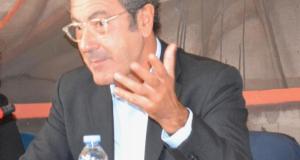
Lecturer: Stefano Velotti
Email: stefano.velotti@uniroma1.it
Office: Villa Mirafiori, Room 202a
Academic Year: 2025/2026
Course Period: February 26, 2026 – May 27, 2026
Credits: 12 ECTS / 6 ECTS (LMS only)
Classroom (Google Classroom):
https://classroom.google.com/c/MjE5OTU4NTExMTda?cjc=be7vlt26
Office Hours
Every Friday from February 27 to May 22, 14:45–16:00, Room 202a, Villa Mirafiori (no appointment required).
Exceptions: April 3, April 10, May 1, May 8.
Appointments may also be arranged via email.
Beginning of Classes
Thursday, February 26, 2026, Aula III, Villa Mirafiori
Schedule and Classrooms
- Wednesday: 10:00–12:00, Aula XIII
- Thursday: 12:00–14:00, Aula III
- Friday: 12:00–14:00, Aula XIII
- Friday: 16:00–18:00, Aula I
Course Description
Aesthetics emerged in Europe during the eighteenth century (“the age of criticism”) and found its fundamental text in Critique of the Power of Judgment by Immanuel Kant.
The course primarily aims to provide an analytical reading of the entire first part of the work, the Critique of Aesthetic Judgment, set against the intellectual debates of Kant’s time. Following an introduction to the main contemporary philosophical positions, the course will offer an overview of Kant’s philosophical development in order to clarify the reasons that led him to write his third critical work, Critique of the Power of Judgment, whose detailed textual analysis constitutes the main objective of the course.
This work has had an influence that is difficult to overestimate—not only on the aesthetic thought of Kant’s contemporaries and on German Idealism, but on the entire philosophical tradition up to the present day. The text is indispensable not only for reflections on taste, art, creativity, beauty, and the sublime, but more broadly for understanding the meaning of experience itself. Contemporary aesthetic, epistemological, and ethico-political thought continues to revisit Kant’s work, whose implications remain productive and seemingly inexhaustible.
In addition to Kant’s text, students are required to study one book chosen from the provided reading list, all of which will be presented and discussed during the Friday class (12:00–14:00), unless otherwise indicated.
Note:
The course as a whole awards 12 ECTS.
For students enrolled in the LMS programme, the course awards 6 ECTS and includes only selected parts of Kant’s text together with one book of choice (see Exam Readings).
Assessment Method
Assessment consists of a final oral examination.
The oral exam will begin with a detailed commentary on passages selected by the student and will evaluate the student’s ability to:
- conduct an in-depth textual analysis from both a technical (terminological and conceptual) perspective,
- reformulate the content using non-technical language,
- connect the passage to the broader philosophical framework of the authors studied
From the discussion of the selected passage, the examination will extend to the entire syllabus.
To pass the exam, students must demonstrate:
- Knowledge of the content of the assigned texts;
- The ability to present them clearly, with correct mastery of the author’s specialized terminology;
- The ability to identify and critically discuss the main theoretical issues;
- The ability to develop independent arguments related to the course topics.
- Fulfilment of points 1 and 2 is a necessary condition for passing the exam.
Grades higher than 27/30 will be awarded to students whose performance satisfies all four criteria.
TESTI ADOTTATI
- Testo Obbligatorio
Esame da 12 CFU: Immanuel Kant, Critica della facoltà di giudizio, Einaudi, Torino 1999 (e successive ristampe). Solo le seguenti parti: Prefazione di Kant; Introduzione di Kant (§§ I-IX); §§ 1-60.
Esame da 6 CFU (per LMS): Immanuel Kant, Critica della facoltà di giudizio, Einaudi, Torino 1999 (e successive ristampe). Solo le seguenti parti: Prefazione di Kant; Introduzione di Kant (§§ I-IX); §§ 1-5; §§ 6, 8-9; §§ 10-13; 15-16; §§ 18-22; §§ 32-38; §40; §§ 43-46; § 49-50; §§ 55-56 comprese Nota I e Nota II; §59.
------------------------------------------------------------------------------------
First Semester
Classes begin: Thursday, October 2
Class schedule: Monday 6:00-8:00 p.m. classroom XIII; Thursday 6:00-8:00 p.m. classroom XIII
https://classroom.google.com/c/MjM1NTIyNTI0MzZa?cjc=ghrue5gc
Office hours in person, room 202 a (from October 2 to December 18, 2025) Thursday 4:45-6:00 p.m.
Aesthetic experience, social actions, and the construction of common sense.
Artworks, festivals, performances, raves, heterotopias: this course, in seminar format, aims to explore certain forms of social action characterized by traits typically associated with aesthetic experience, which usually alter the spatial and/or temporal perception of everyday life. Regarding space in particular, we will analyze and discuss Michel Foucault's texts dedicated to "other spaces," to "heterotopias" ("real places [...] that constitute a sort of counter-places, kinds of utopias effectively realized in which [...] all the other real places found within the culture are simultaneously represented, contested, and subverted"). Foucault himself connects heterotopias to "heterochronies," where, along with space, time is suspended or configured in a peculiar manner, as happens precisely in festivals (on which we will read texts by Aldo Capitini, Furio Jesi, H.G. Gadamer, and others), but also in certain artistic performances (for example, those by Tehching Hsieh, all lasting one year) and in rave parties (on which we will analyze, among others, texts by McKenzie Wark).
The questions that will be raised regarding these phenomena concern their conditions of possibility, their structure, their meaning, their potential attainability and relevance in our time, the role they can play in shifting some coordinates of the dominant common sense, their strength and their limits (a notion, that of "common sense," repeatedly questioned by philosophy, and particularly by Kant, and which here will be revisited through reading the text developed by the “Forum Disuguaglianze e diversità”, Squarci. L’arte nella contesa per il senso comune). These questions are linked to the role of social control, self-control, and their interweaving with the partial but essential dimension of uncontrollability that characterizes human experience and which emerges prominently in these phenomena, making itself visible.
Given the seminar character of the course, students will be invited to give a class presentation (20' approx.) on a topic relevant to the issues analyzed. The presentation will constitute 30% of the final evaluation and will serve to test the ideas that will be developed in the written paper, on which the remaining 70% of the evaluation will be based.
Non-attending students will only be evaluated on the written paper.
The paper (20.000-25.000 characters, spaces included) will focus on the analysis and critical assessment of one or more texts covered in the course. The topic of the paper must be agreed with the teacher on the student's proposal and must be delivered in definitive form at least two weeks before the exam.
ESEMPI DI DOMANDE E/O ESERCIZI FREQUENTI
Since there is no oral exam or written exam with predefined questions, it is not possible to provide examples of questions. However, it should be emphasized that students will need to propose, during the course of the seminar, topics for their oral presentation (in class) drawing inspiration from the themes discussed based on the course texts. This presentation may serve as the basis for writing the final paper.
Non-attending students must submit to the instructor, via email or in person, the outline of the topic they intend to address.
Testi adottati
The texts will be taken from the following books. In some cases, pdfs of the relevant pages will be provided
Capitini, Aldo Il potere di tutti, La nuova Italia, Firenze 1969, con un’introduzione di N. Bobbio.
Barca, F. e Zabatino, A. (eds.), Squarci. L’arte nella contesa per il senso commune, Fondazione Feltrinelli, Milano 2025.
Foucault, Michel, Eterotopia (1967), Mimesis, Milano 2018.
Gadamer, Hans Georg, L’attualità del bello. L’arte come gioco, simbolo, festa, (1975) Marietti, Bologna 2021.
Jesi, Furio, ll tempo della festa(1977), Nottetempo, Milano 2023.
Velotti, Stefano, Sotto la soglia del controllo, Laterza, Roma Bari 2024.
Wark, Mckenzie, Raving, Nero, Roma 2023.
Frontal teaching of the texts and topics covered. Oral presentations by the participants.Seminar discussion of the topics covered with possible “flipped classroom” experiments.
Attending the course is highly recommended
----------------------------------
EXAMS
22/04 (straordinario)
10/06
26/06
15/07
10/09
25/09
11/11 (straordinario)
2027
13/01 (2026-27)
Receiving hours
Tutti i venerdì dalle 14.45 alle 16.00, dal 27 febbraio 2026 ale 22 maggio 2026 stanza 202a Villa Mirafiori. In altre date o orari, su appuntamento.
Curriculum
STEFANO VELOTTI
Curriculum Vitae
Professore ordinario di Estetica
Dipartimento di Filosofia
Sapienza – Università di Roma
Orcid code: 0000-0002-9421-0257
E-mail: stefano.velotti@uniroma1.it
https://phd.uniroma1.it/web/STEFANO-VELOTTI_nC920_EN.aspx
I. Formazione
1989-1992: Dottorato di ricerca in Estetica, Università di Bologna (consorzio con Università La Sapienza di Roma, e le università statali di Perugia, Torino e Milano). Tutor: prof. E. Garroni, co-tutor prof. F. Calvo. Titolo della tesi: Sapienti e bestioni. Saggio sull’ignoranza, il sapere e la poesia in Giambattista Vico.
1979-1984: Laurea in filosofia, Università “la Sapienza”, Roma. Relatore prof. Emilio Garroni, correlatore prof. T. De Mauro. Titolo della tesi: Adolf Loos e il problema dell’ornamento. Votazione 110/110 e lode, con dignità di stampa.
1979: Diploma di Maturità classica conseguito presso il Liceo-Ginnasio “T. Tasso” di Roma.
II. Percorso accademico:
2019 (1 marzo-presente): Professore ordinario di Estetica (SSD M-Fil/04).
2013 (5 dicembre): conseguimento Abilitazione Scientifica Nazionale (ASN 2012) per la I fascia, per il SC 11/C4, SSD M-FIL/04 (Estetica).
2011, dicembre -2019, febbraio: Professore associato di Estetica presso il Dipartimento di Filosofia della Sapienza - Università di Roma.
1996, dicembre – 2011, dicembre: Ricercatore in Estetica presso il Dipartimento di Filosofia della Sapienza - Università di Roma.
1994-1996: Assistant Professor, Yale University, Dept. of Italian Studies. Confermato fino al 2000: dimissioni nel dicembre del 1996 per prendere servizio come Ricercatore alla Sapienza – Università di Roma – Dipartimento di Studi filosofici ed epistemologici.
III. Grants, borse di studio e periodi di studio all’estero
2017, novembre, assegnazione del “Finanziamento delle attività base di ricerca” (FFABR).
1996, (gennaio–dicembre), “Morse Fellowship”, Yale University, New Haven, CT, U.S.A.
1995 (luglio-agosto), “Griswold Fellowship”, Yale University, New Haven, CT, U.S.A.
1993 (aprile-agosto), “Visiting Scholar”, Dipartimento di Filosofia, Emory University, Atlanta, GA, USA.
1990-91 Visiting Scholar, Program for Interdisciplinary Studies, Stanford University, Stanford, CA, USA.
1984 Borsa di studio del Ministero degli Esteri italiano per un periodo di studio trimestrale presso il Loos-Archiv, Albertina, Vienna, Austria.
IV. Didattica
2019 - presente: in qualità di Professore Ordinario, insegnamento di corsi di Laurea triennale, Laurea magistrale in inglese, e corsi per i dottorandi presso il Dipartimento di Filosofia della Sapienza – Università di Roma.
2014 – Speroni Chair Visiting Professor, first Quarter, University of California Los Angeles UCLA.
2013 – Speroni Chair Visiting Professor, third Quarter, University of California Los Angeles, UCLA.
2011 – 2018: in qualità di Professore Associato, insegnamento di corsi di Laurea triennale, Laurea magistrale e corsi per i dottorandi presso il Dipartimento di Filosofia della Sapienza – Università di Roma.
2005 – 2011: affidamento, in qualità di Ricercatore, dell’insegnamento di “Storia dell’estetica” presso il Dipartimento di studi filosofici ed epistemologici, Facoltà di filosofia, Sapienza – Università di Roma.
2006-7 in qualità di Professore a contratto, Università di Ferrara, Dipartimento di Architettura, lezioni di Estetica.
1997- 2005: in qualità di Ricercatore, seminari e moduli didattici di Estetica, presso il Dipartimento di studi filosofici ed epistemologici, Facoltà di filosofia, Università degli studi “La Sapienza”, Roma.
1999, 3 aprile -16 giugno: “Associate Visiting Professor” presso la University of California, Santa Barbara (UCSB), corsi per laureandi e dottorandi (“undergraduate” e “graduate”), French and Italian Dept.
1994-1996, vince il bando per “Assistant Professor” presso la Yale University, Dipartimento di “Italian Studies”, corsi per laureandi e dottorandi (“undergraduate” e “graduate”). Dimissioni: dicembre 1996, per prendere servizio presso il Dipartimento di studi filosofici ed epistemologici della Sapienza – Università di Roma.
1993 (quadrimestre autunnale), “Visiting Assistant Professor” presso la Stanford University, Department of French and Italian, corsi per laureandi e dottorandi (“undergraduate” e “graduate”).
1993 (quadrimestre autunnale). “Visiting Assistant Professor” presso la University of California, Los Angeles (UCLA), Department of Italian, corsi per laureandi e dottorandi (“undergraduate” e “graduate”).
V. Altri incarichi accademici
2019 (febbraio-presente) membro del Consiglio tecnico-scientifico, DigiLab, Sapienza – Università di Roma.
2019-2021: Coordinatore del Dottorato di ricerca in Filosofia, Sapienza – Università di Roma.
2016 – 2022: Senior Fellow, Scuola Superiore di Studi Avanzati (SSAS), Sapienza – Università di Roma.
2014-2022: Membro del Consiglio direttivo del Museo Laboratorio di Arte Contemporanea (MLAC) della Sapienza – Università di Roma
2014-17: membro della commissione per la qualità didattica (GAQ) del Dipartimento di Filosofia della Sapienza – Università di Roma.
2013 – presente: responsabile delle collane di Filosofia, con il prof. E. Spinelli, della Sapienza Università Editrice (SUE).
2013 – presente: responsabile del “bilateral agreement” all'interno del Programma europeo LLP-Erasmus, per il Dipartimento di Filosofia/Facoltà di Lettere e filosofia – Sapienza Università di Roma, con la Universität Wien.
2010 – presente: membro del Collegio dei docenti del Dottorato di Ricerca in filosofia del Dipartimento di Filosofia della Sapienza – Università di Roma.
2010 – presente: responsabile del “Seminario permanente in Estetica” per il Dottorato di Ricerca in filosofia del Dipartimento di Filosofia della Sapienza – Università di Roma.
2008-2011: Membro della Giunta di Dipartimento (Dipartimento di Filosofia, Sapienza – Università di Roma).
2008-09: Membro del Collegio dei docenti del Dottorato di ricerca “Progetto dello spazio e del prodotto di arredo”, Facoltà di Architettura, “Sapienza – Università di Roma”.
VI Valutazioni, società scientifiche, collaborazioni a riviste.
2024 ERC Consolidator Grant Panel Member of the ERC Peer Review Panels, SH5
2023- presente: Membro del Comitato scientifico della collana “Andersiana”, Mimesis, Milano.
2022 ERC Consolidator Grant Panel Member of the ERC Peer Review Panels, SH5.
2018 – presente: membro dell’Advisory Board della rivista “Postfactum: A Transdisciplinary Journal”
2018 - presente: membro del Comitato scientifico della collana filosofica “Esperienze dell’estetico”, Mimesis edizioni, Milano.
2018 - presente: membro del Comitato scientifico della collana filosofica “I libri del laboratorio”, Edizioni Efesto, Roma.
2017-18: “Remote referee” per progetti Horizon 2020, ERCEA ADG SH5.
2017 – presente: socio onorario dell’Associazione filosofica “Syzetesis”.
2016: valutatore VQR 2011-2014 per SC 11/C4.
2015 – presente: membro del Comitato scientifico del premio “The Bridge – Book Award” per la saggistica, (Ambasciata USA – Casa delle letterature, Roma).
2013 – presente: membro del Comitato scientifico della collana di filosofia “Forme del possibile”, Mimesis, Milano.
2012 – presente: membro del Comitato scientifico della rivista “Filosofia.it”.
2011: valutatore VQR 2004-2010 per SC 11/C4.
2009 – presente: referee per la rivista “California Italian Studies”.
2008 – presente: membro del comitato scientifico della “Rivista di estetica” e referee.
2008 – presente: Presidente della associazione scientifica “Cattedra internazionale Emilio Garroni” (CiEG).
2004 – presente: membro della Società Italiana di Filosofia Analitica (SIFA).
2001 – presente: membro della Società Italiana di Estetica (SIE).
1995-99: Fellow dello “Ezra Stiles College”, Yale University.
VII Responsabilità scientifica per progetti di ricerca
2024-2026: Principal Investigator per il Progetto di ricerca di Ateneo (“progetti medi”), Artistic Practices, Aesthetic Experience, and Common Sense.
2022-2024: Principal Investigator per il Progetto di ricerca di Ateneo (“progetti medi”) (Fuori)Controllo. Conseguenze involontarie, conseguenze inattese ed effetti secondari desiderabili delle pratiche sociali, estetiche e scientifiche.
2019-2021: Principal Investigator per il Progetto di ricerca di Ateneo (“progetti medi”) Atlante delle forme di vita urbane (finanziamento ottenuto € 14.600 + assegno di ricerca € 23.787).
2018-2020: Principal Investigator per il Progetto di ricerca di Ateneo (“grandi progetti”) Urban Forms of Life: Affective, Aesthetic, and Moral (finanziamento ottenuto € 26.000, 20/11/’17)
2015-2018: Responsabile scientifico del progetto “Ricerche universitarie” per il progetto Quale cultura per la contemporaneità? Una ricerca estetico-filosofica (finanziamento ottenuto € 31.450, comprensivo di assegno di ricerca).
2011-13 Responsabile scientifico per il progetto “Ricerca di Ateneo” Metarappresentazioni (finanziamento ottenuto € 2500).
VIII Breve descrizione delle attività di ricerca
Oltre ai temi classici dell’estetica “analitica” e “continentale” (lo statuto della sensibilità, il problema del senso dell’esperienza, lo statuto dell’arte, la natura del giudizio, i rapporti tra arte, società e politica, le relazioni tra estetica ed epistemologia, ecc.) è interessato ai problemi filosofici e socio-politici connessi all’arte e alla cultura contemporanee e ai nuovi media. La sua ricerca scientifica segue un doppio binario: da un lato, si focalizza sulle radici della modernità, in particolare, su Vico e la filosofia kantiana. Dall’altro, dialoga con la contemporaneità (in particolare, la ricerca filosofica in relazione alle arti, ai nuovi media, alla letteratura ecc.). I suoi interessi, centrati sull’estetica, incrociano problemi etici, sociali e politici, sia sul versante della filosofia “continentale” sia su quello della filosofia “analitica”.
Parole chiave: estetica, controllo, arti visive, filosofia e letteratura, estetica dei nuovi media, filosofia della fotografia, immagine, immaginazione, illusione, giudizio estetico.
Lessons
| Lesson code | Lesson | Year | Semester | Language | Course | Course code | Curriculum |
|---|---|---|---|---|---|---|---|
| 1023633 | ESTETICA II.I | 1st | 2nd | ITA | Philosophy | 33525 | Curriculum unico |
| 1027007 | ESTETICA I.II A | 3rd | N/D | ITA | Literature Music Performing Arts | 33529 | Curriculum unico |
| 1023634 | ESTETICA II.I A | 1st | 1st | ITA | Philosophy | 33555 | Filosofia |
| 1023634 | ESTETICA II.I A | 1st | 1st | ITA | Philosophy | 33555 | Filosofia |
| 1022651 | ESTETICA | 3rd | 2nd | ITA | Studies in Art History | 33522 | Curriculum unico |